When
 traveling
through any country it is easy enough to find all the
"typical" tourist attractions. The museums, the theme
parks, etc. In other words the things that they advertise the
most to the public. However, in Regina one of the things you
certainly don't want to miss is the Wascana Centre. The Wascana
Centre is a green oasis in the middle of a busy city and is
billed as the largest urban park in the world. It encompasses the
Legislature Building, as well as a number of museums, nature
centers and a man-made lake. Although the present center was not
established until 1962 the original plan began in 1906, when the
site for the Saskatchewan Legislative Building was chosen. The
present park consists of 2300 acres (930 hectares) of land and
water that will continue to be a green oasis in the heart of
Regina.
traveling
through any country it is easy enough to find all the
"typical" tourist attractions. The museums, the theme
parks, etc. In other words the things that they advertise the
most to the public. However, in Regina one of the things you
certainly don't want to miss is the Wascana Centre. The Wascana
Centre is a green oasis in the middle of a busy city and is
billed as the largest urban park in the world. It encompasses the
Legislature Building, as well as a number of museums, nature
centers and a man-made lake. Although the present center was not
established until 1962 the original plan began in 1906, when the
site for the Saskatchewan Legislative Building was chosen. The
present park consists of 2300 acres (930 hectares) of land and
water that will continue to be a green oasis in the heart of
Regina. 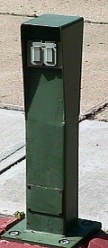
It was really difficult to decide where to begin, but we finally settled on the Legislative Building. As we parked in front of the building I noticed something that looked like a parking meter situated in front of all the parking spaces. Being the curious creature that I am I had to go over and take a closer look. Would you believe they were electrical outlets for people to plug in their heaters for their cars, since Regina gets such cold weather. Brrrr. Time for "Chilly Willy(ette)" to move south. We then went inside the Legislative Building for a look around. Since the government was not in session our tour included the chambers where the legislators would meet. Our guide, Shawn, pointed out that the interior of the building was created of 34 different types of marble, some of which are no longer in existence in nature. One of these types of marble is a rare green Cyprus marble which was used in the columns in the rotunda. After we wandered outside
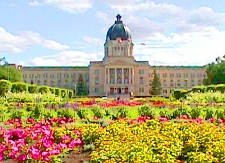 into the formal gardens which stretch several
hundred yards from the front of the building to the edge of the
lake. The gardens were a delightful balance of color and texture,
along with a delightful mixture of aromas.
into the formal gardens which stretch several
hundred yards from the front of the building to the edge of the
lake. The gardens were a delightful balance of color and texture,
along with a delightful mixture of aromas. After leaving the Legislative Building we went to the Royal Saskatchewan Museum. The Museum was very well done with a number of life-size dioramas, done as we have seen in a number of other museums, with no glass between the scenes and the public. This method makes for a very real feel to the scenario. It also features a large exhibit on the "first nation"
 peoples.
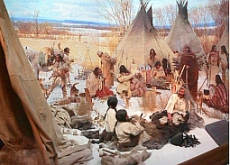
One of the fascinating parts of this was a diorama portraying the
outdoors, where you could hear the voices of several first nation
people talking about their life. It ranged from very old to very
young and really gave you a feeling like you were sitting around
a campfire hearing your "elders" pass along stories to
the children.
peoples.
One of the fascinating parts of this was a diorama portraying the
outdoors, where you could hear the voices of several first nation
people talking about their life. It ranged from very old to very
young and really gave you a feeling like you were sitting around
a campfire hearing your "elders" pass along stories to
the children. In addition to the Museum the University of Regina have a number of buildings in the park dedicated to education. The University provides 15% of the funding for the Centre.
In several areas around the park are wildlife areas dedicated to the preservation and protection of various types of wild fowl. One of these areas is called Goose Island. It is interesting to note that Canadian Geese stay with the same mate until one of them dies. Also, a goose will return to the general area where they learn to fly. In order for them not to have an overabundance of geese returning to this area, they will take some of the goslings before they learn to fly and take them to other areas. We
 went
to one area called the Wascana Waterfowl Park. This is presented
as a completely natural, undisturbed preserve and habitat
designed for public education and enjoyment. Some of the birds in
this area are injured animals presented to the park, treated and
then released here in a hope that they will be able to return to
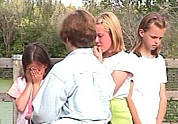
the wild. As we walked into the park we saw three young girls
standing next to the lake, sobbing as if their hearts would
break. Of course, I had to find out what was wrong. Turned out
that the girls had found a baby duck that had hatched out of a
nest next to the bike trail. They thought that the mother had
abandoned it and also thought (mistakenly) that ducks could swim
as soon as they were born. So they brought him to the lake and
put him in the water. As we approached the poor duckling was
drowning. (Their feathers aren't waterproof at birth and it isn't
until later that they get rid of
went
to one area called the Wascana Waterfowl Park. This is presented
as a completely natural, undisturbed preserve and habitat
designed for public education and enjoyment. Some of the birds in
this area are injured animals presented to the park, treated and
then released here in a hope that they will be able to return to
the wild. As we walked into the park we saw three young girls
standing next to the lake, sobbing as if their hearts would
break. Of course, I had to find out what was wrong. Turned out
that the girls had found a baby duck that had hatched out of a
nest next to the bike trail. They thought that the mother had
abandoned it and also thought (mistakenly) that ducks could swim
as soon as they were born. So they brought him to the lake and
put him in the water. As we approached the poor duckling was
drowning. (Their feathers aren't waterproof at birth and it isn't
until later that they get rid of 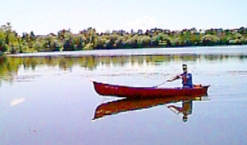 their baby down that they can swim.) Although
Bob urged me to leave the duck to its misery, I reached in and
brought him out of the water. I was able to get most of the water
out of his beak and lungs. I talked with the girls and kind of
calmed them down. Then I went in search of a mother duck who had
little ones. I was fortunate to find one not too far away. I then
inserted our duckling who was just a little younger than her
brood. I waited until Mom turned her back and put the duck near
the nest. We then left quietly and hoped that Mom would follow
nature and let the little duck join her brood.
their baby down that they can swim.) Although
Bob urged me to leave the duck to its misery, I reached in and
brought him out of the water. I was able to get most of the water
out of his beak and lungs. I talked with the girls and kind of
calmed them down. Then I went in search of a mother duck who had
little ones. I was fortunate to find one not too far away. I then
inserted our duckling who was just a little younger than her
brood. I waited until Mom turned her back and put the duck near
the nest. We then left quietly and hoped that Mom would follow
nature and let the little duck join her brood. The next
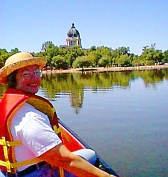 day we came back to take a canoe out into the
lake and see everything at a new prospective. Although it was a
Sunday we had the lake pretty much to ourselves. It was a very
serene feeling, being out on the lake, in this beautiful park
where you could just slightly hear the sounds of the city arround
you.
day we came back to take a canoe out into the
lake and see everything at a new prospective. Although it was a
Sunday we had the lake pretty much to ourselves. It was a very
serene feeling, being out on the lake, in this beautiful park
where you could just slightly hear the sounds of the city arround
you. If you do decide to go be sure and visit their Visitors Center and pick up a copy of "Walks Through Wascana Centre." It features a number of walking (or biking) trails that allow you to see all the various parts of the park. For us, it was really a welcome change to the hectic pace we sometimes set when we are touring.